Friday, March 20, 2020
How Can Fashion E-Commerce Be More Inclusive?
Fashion is making great strides toward inclusivity. As models of all sizes, ages and ethnicities walk down runways across the world, it’s more clear than ever that inclusivity and diversity aren't merely buzzwords -- they're the norm.
However, the same has not translated into e-commerce, which is surprising, given that retail is the natural extension of fashion. It is especially significant given that we live in this time of social media where consumers are more vocal and vigilant than ever before. Here are three ways in which retailers can enable inclusive experiences for their online customers.
Most female editorial models are 5 feet, 9 inches tall and quite slim, whereas the average American woman is about 5 feet, 4 inches tall and veers between size 16 and 18. When consumers are shopping online and see these tall and thin models, one of two things happens. They may shop aspirationally, which often leads to returns because of fit problems and costs e-commerce retailers a lot in return shipping and restocking. Or, the consumer refrains from making the purchase. Many times, had she seen the garment on a model of her size, she may have actually been convinced to buy it by the way it looked.
Size visualization is when the same garment can be displayed to shoppers across a number of different sizes, and if your e-commerce platform isn't practicing it, you should consider the impact it could have on your bottom line. Everlane, for example, shows garments in four sizes: 0, 2, 6 and 10. Universal Standard sells and photographs garments on models in sizes ranging from 0 to 40.
The Good American is another example of a brand that does size variation well and has a more diverse range of models too -- here, shoppers can see models of sizes 0, 8 and 16. It is worth mentioning that Khloe Kardashian, who is one of the co-founders of the brand, announced only this month that the brand was making more efforts to make its e-commerce experience more inclusive by casting real women across all sizes instead of models for its denim. Inclusivity has been the brand’s anchor from its inception, and it has firmly stuck behind it -- resulting in sales that crossed $1 million on its first day and making it the biggest denim launch in history.

Tuesday, January 21, 2020
Milan's Best Trattorias Combine Personality With Panache
Owing to Milan's international character, finding all kinds of first-rate food from sushi to Indian dosas is certainly easier than in Rome or Florence, and in its number of Italian regional trattorias and ristoranti you'll find Milan dotted with entries from Sicily, Tuscany, Liguria, Abruzzo and, of course, its own region of Lombardy.
Many have been in the city a long time, and the local favorites are certainly more interesting than the tourist-favored places within the Galleria. Since Milan is such a fashionable city, the concierges tend to steer foreign visitors to the most stylish and most expensive spots—some good, some merely expensive—like Pacifico, Niko Romito, Torre in the new Prada building, the Armani Ristorante and Dolce & Gabbana's Bar Martini.
Good or not, those are decidedly not where the Milanesi eat regularly. Smaller trattorias are more their style and cheaper.
Long Ball Dresses
Many have been in the city a long time, and the local favorites are certainly more interesting than the tourist-favored places within the Galleria. Since Milan is such a fashionable city, the concierges tend to steer foreign visitors to the most stylish and most expensive spots—some good, some merely expensive—like Pacifico, Niko Romito, Torre in the new Prada building, the Armani Ristorante and Dolce & Gabbana's Bar Martini.
Good or not, those are decidedly not where the Milanesi eat regularly. Smaller trattorias are more their style and cheaper.
Long Ball Dresses
Sunday, December 29, 2019
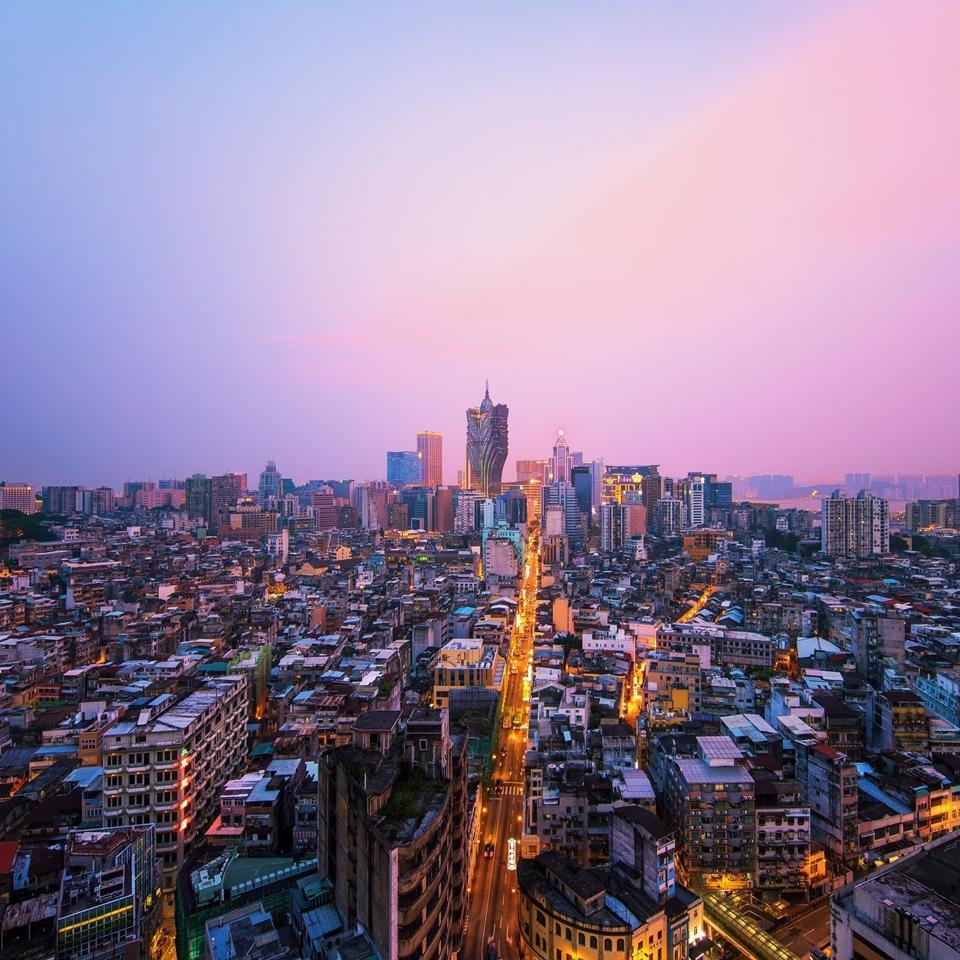
Macao Is The Fashionable Playground For The Young And Rich In China
The mainland Chinese market has an insatiable appetite for all things beautiful and bespoke. According to Dr. Daniel Langer, CEO of Équité (a luxury, lifestyle and consumer brand strategy firm), they are the Nouveau Riche and "disrupting (the) luxury (industry) the most." He explains that "the youngest customers now have the highest expectations toward luxury brands...in China, more than 80 percent of luxury goods are bought by consumers under 40, including a rapidly increasing share of Gen Zers, who are all 20 years old or younger." And nowhere is this more apparent than in Macao, China - the "Vegas of Asia"- and a vast playground for the wealthy Chinese.
According to Lily Cheng (Director of Public Relations for Sands Resorts Macao) the number one demographic for those seeking a "staycation/getaway" are from Mainland China, who apparently have plenty of hedonistic desires in need of satisfying.
In trying to navigate the future of luxury, it's been the objective of Sands Resorts and its family of brands to carve out an enduring space in an otherwise volatile market; so they are not only appeasing needs, but attempting to anticipate and anchor them as well. With 8 hotels (and growing) to choose from and their combined 12,000+ rooms, properties are frequently upgrading their respective "luxe life" to remain top-of-mind, experiential and "Instagram-worthy". Moreover, "because competition is so keen in Macao - and the standards of hospitality so high - in order to differentiate ourselves, we need buildings and properties that are iconic and easily identifiable," explains Joyce Chiu, Senior Public Relations Manager for Sands China Ltd.
Sunday, November 24, 2019
A Slow Fashion Brand Celebrating Asian Women
Natasha Sumant was working as a freelance art director in New York when she started exploring South Asian feminism.
"I found that there was a hole in the market and nothing was really speaking to us," Sumant, who is 28, tells Forbes.
Gundi is a Hindi expression used for women who aren’t considered ladylike - or for female thugs.
"Gundi Studios is a progressive brand that celebrates outspoken South Asian womxn in motherland and diaspora," Sumant explains. "Gundi is the Hindi word for female-thug or gangsta, a colloquialism used to describe girls who misbehave. The brand was founded in response to the lack of representation in media of assertive and independent South Asian women."
Sumant had designed a piece of typography reading "Gundi" and had embroidered it onto a patch, and featured the patch on fashion shoots, which gained traction on social media.
"They really resonated with people, so I started selling the patches to others to pin onto their clothing and claim the word Gundi for themselves too.
"I started buying up vintage jackets and selling those with the patches pre-pinned. When I realized that people preferred buying the jackets over the patches alone, I decided to launch a collection that would enable people to wear their values. I moved back to India in 2018 to design our first collection, and build out our supply chain."
Gundi Studios’ products are handmade in India, and clothes are produced in small batches. Sumant’s hope is to turn the fast fashion industry on its head, by not just producing clothing, but also running a media outlet on the brand’s site - which includes producing short narrative films.
"Our streetwear is created in a women-led supply chain, and our media addresses issues related to gender and postcolonialism. Women are often victims of the fast fashion industry on both the demand and supply side—advertising regularly plays off female insecurities to generate demand for products made by disenfranchised (and often female and South-Asian) garment workers.
"Our clothes are made to last by a small and dedicated team of artisans, embroiderers and tailors based in India."
The studio uses aari, zari and cut dana techniques which are traditionally used on sarees and burkhas, but brings them into the modern day with streetwear-inspired styles.
Sumant said her company’s target audience is similar to that of NorblackNorWhite and Brother Vellies, who both merge design with sustainability and traditional techniques. "But we talk to the South Asian market in a way that is very different to others," she adds. "Our campaigns and content speak to a market of underground South Asian diaspora. We make streetwear that takes sustainability, and traditional craft techniques into consideration and our supply chain is womxn led and womxn run."
Sumant’s biggest challenge has been creating an ethical supply chain and employing South Asian women at "every level" of the business.
She says there are "real systemic problems" within the garment industry in India and while it’s quite easy to find a factory that will make anything for you, it is hard to find ethical spaces.
"In India, on the factory floor womxn often occupy lower positions of hand embroidering, hand sewing or using machines. Pattern cutters are almost always men. Embroiderers that can do our signature zari embroidery work are almost always men, so it was a challenge finding skilled women who could execute our designs."
The types of embroidery the company uses require long stretches of uninterrupted time, which Sumant says explains why it is often the domain of male artists who have fewer responsibilities at home, and therefore more time to invest.
After dedicating most of 2019 to finding ethical partners, Sumant can now say her supply chain is "100% womxn led and womxn run".
The collection and feminist artwork has already hit Mumbai, New York and London, and going forward Sumant hopes to continue growing her audience.
"We’d like to get more of our pieces into consumer’s hands so that we can provide the women working at our production partners with as much meaningful work as possible.
"We’re also going to keep making work that uses eastern craft techniques and recontextualises South Asian art forms into genres and styles that can be seen across fashion and not just the "ethnic" section of Anthropologie stores and Free People." wedding dresses
Saturday, October 26, 2019
The Clothing Rental App That Wants To End Fast Fashion
Brits purchase more clothing than any other European country, spending £2.7 billion ($3.5 billion) on fashion that they only wear once.
The founder of a fashion technology company called By Rotation is hoping to change consumer habits, and help the planet to boot.
U.K.-based, India-born and Singapore-raised Eshita Kabra came up with the idea when she was planning her honeymoon.
"I turned to social media for ideas on what to wear, and always saw influencers on social media wearing beautiful clothing—often only once—in idyllic settings. I started to wonder if these items were gifted from the brands themselves or bought just for the photo, and what would happen to them after."
Kabra didn't want to follow the footsteps of Rent the Runway, or China's YCloset, as she wanted to "build a sustainable community, rather than a cheaper alternative to dressing new."
By Rotation launched via a beta platform in April 2019, while 28-year-old Kabra was still working full time at a hedge fund.
Kabra says her company differs from players like Rent the Runway, or U.K. companies such as Girl Meets Dress, Front Row, and Our Closet, as they are the "U.K.'s first and only fashion rental app."
Monday, August 5, 2019
7 Affordable Tips For A Fabulous Same-Sex Wedding
Wedding season is upon us, and same-sex couples across the country want to make their special day as unique and special as they are. With many of these couples funding their same-sex weddings, what options do they have to make their day memorable? How can they avoid letting their wedding ruin them financially?
Palifroni’s been planning same-sex weddings and commitment ceremonies since before marriage equality in June 2015. She’s seen the evolution of these ceremonies and says same-sex couples are growing more comfortable just with the idea of throwing their own wedding. They’re embracing it more, whereas initially many were wrapping their heads around the concept that weddings were actually an option for them.
Palifroni says, “We’re loving that more LGBTQ couples are reaching out and saying, ‘Yes, we do want to have a wedding. We do want to have a celebration. And, what does that look like for us?’”
When asked if same-sex weddings are becoming more traditional in look and feel now that we’re four years into Federally recognized same-sex marriages, Palifroni says no. “The thing about weddings today is there are no rules anymore, and that goes for opposite and same-sex weddings,” she says. Palifroni continues, “Once you have all the base pieces together—who, what, where, when—it’s really up to the couple to add in their own personality.”
flower girl dresses australia
Palifroni’s been planning same-sex weddings and commitment ceremonies since before marriage equality in June 2015. She’s seen the evolution of these ceremonies and says same-sex couples are growing more comfortable just with the idea of throwing their own wedding. They’re embracing it more, whereas initially many were wrapping their heads around the concept that weddings were actually an option for them.
Palifroni says, “We’re loving that more LGBTQ couples are reaching out and saying, ‘Yes, we do want to have a wedding. We do want to have a celebration. And, what does that look like for us?’”
When asked if same-sex weddings are becoming more traditional in look and feel now that we’re four years into Federally recognized same-sex marriages, Palifroni says no. “The thing about weddings today is there are no rules anymore, and that goes for opposite and same-sex weddings,” she says. Palifroni continues, “Once you have all the base pieces together—who, what, where, when—it’s really up to the couple to add in their own personality.”
flower girl dresses australia
Subscribe to:
Posts (Atom)